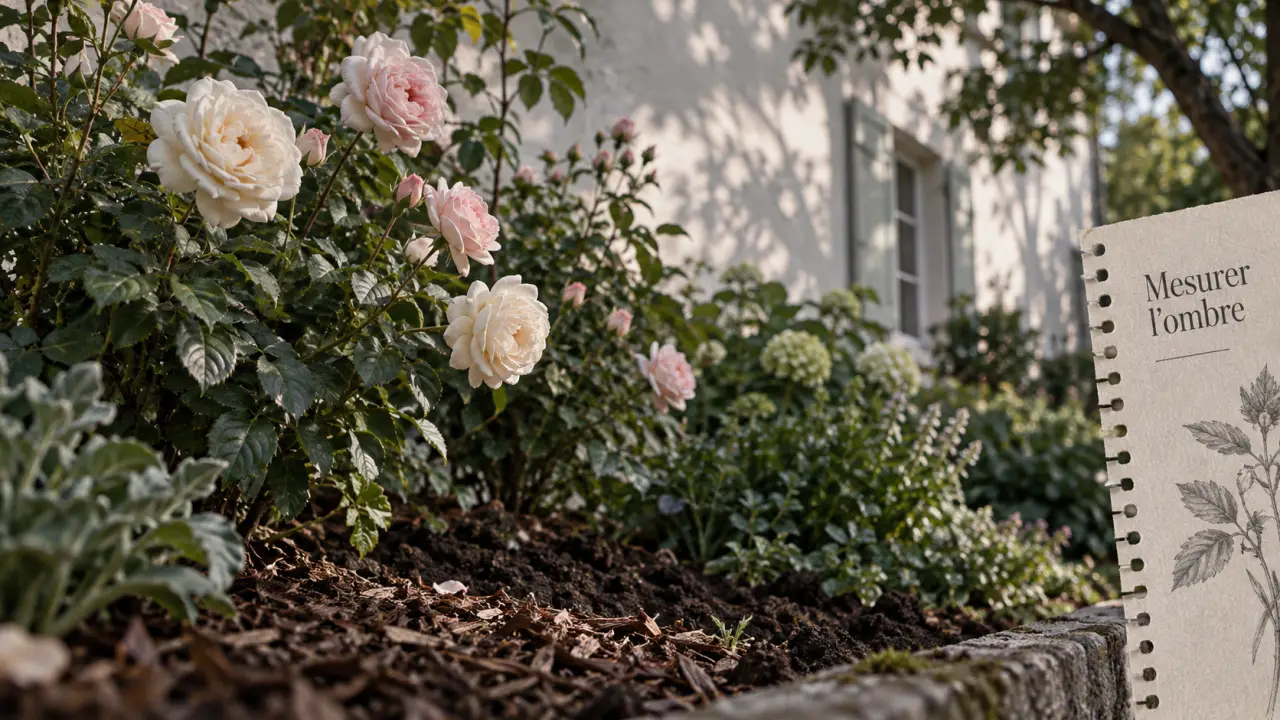
Shade-tolerant roses can bring colour and fragrance to a border, an open north-facing wall, or a garden corner that receives limited sunlight. The key point is realistic: these roses tolerate partial shade, but they do not thrive in deep, permanent darkness. Choose a suitable rose type, prepare the soil well, and you can still enjoy healthy foliage and flowers.
Start by measuring the shade, not guessing it
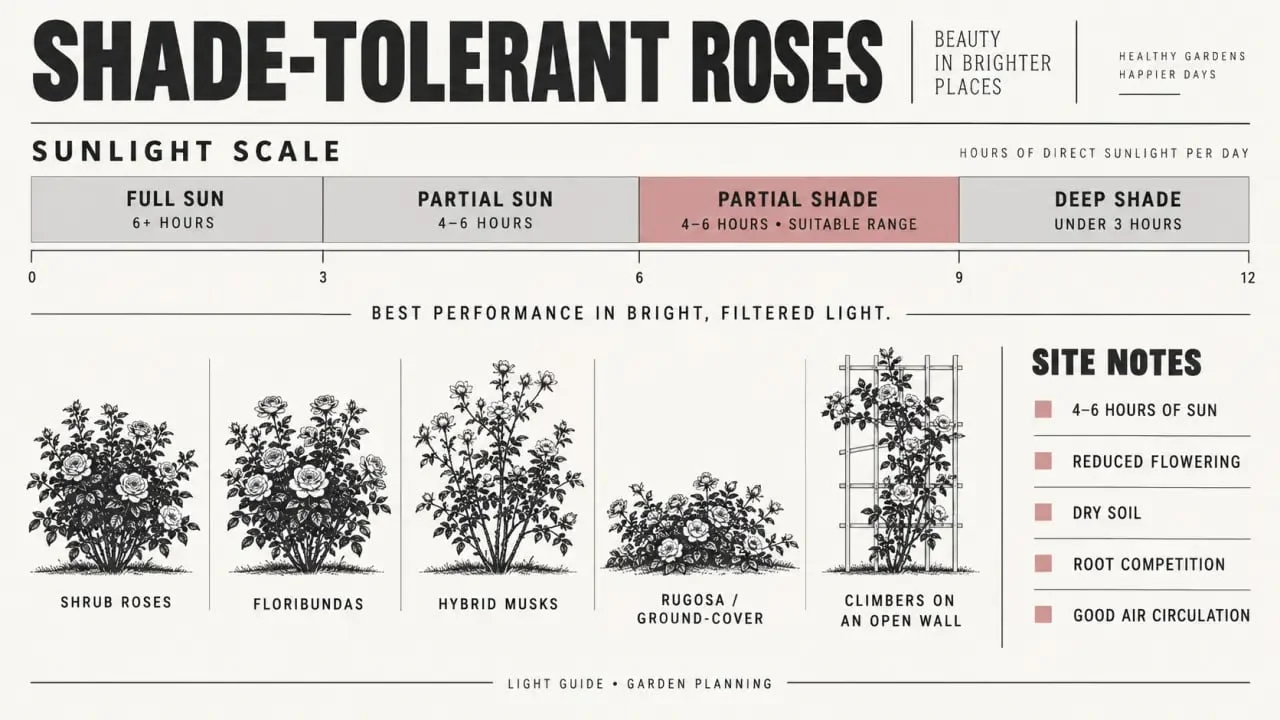
Most roses perform best with substantial sunlight, often six to eight hours a day. Selected shade-tolerant roses can grow and flower with roughly four to six hours of good sun. Below that level, growth may become sparse and flowering is usually reduced. A site that looks shady at midday may still receive useful morning or late-afternoon light, so observe it at several points during the day.
Partial shade is different from deep shade
Partial shade includes a border with direct morning sun, a position with filtered light beneath an open canopy, or a wall that stays bright without receiving full sun all day. Deep shade means little or no direct light, such as the dense area beneath an evergreen tree or between closely spaced buildings. Roses may survive in these conditions for a while, but they rarely produce the flowering display you expect.
Sunlight also helps you understand where to plant. Morning sun is often gentler and can dry dew from leaves, while a bright north-facing wall may reflect enough ambient light for a suitable climber. Mapping the light across the season helps you choose a rose for the site instead of forcing a full-sun variety into the darkest corner.
Choose the rose habit that matches your space
There is no single best rose for every shaded garden. Growth habit, flowering pattern, fragrance, and the amount of open sky around the plant all influence the choice. In partial shade, varieties known for reliable growth are generally safer than roses selected only for very large blooms.
| Rose type | Why it can suit partial shade | Best use |
|---|---|---|
| Shrub roses | Versatile shape and often repeat flowering | Mixed borders and informal planting |
| Floribundas | Useful for repeated clusters of flowers | Smaller borders and grouped displays |
| Hybrid musks | Often valued for airy growth and fragrance | Soft, natural-looking borders |
| Rugosas and ground-cover roses | Robust forms for lower planting | Slopes, edging, and broad ground cover |
| Climbers and ramblers | Can use the brighter upper part of a wall or support | Open north-facing walls and fences |
| Albas, gallicas, and damasks | Some once-flowering heritage roses tolerate partial shade | Traditional gardens and spring displays |
Repeat flowering or one main flush?
Repeat-flowering shrub roses and floribundas are practical when you want colour over a longer season. Heritage groups such as albas, gallicas, and damasks may flower mainly once, but they can still appeal through their character, perfume, and generous spring display. Consider this feature before you buy. Shade may already limit the number of blooms, so a repeat-flowering rose is often the more forgiving option when regular flowers are your priority.
Planting mistakes that make shade harder for roses
Low light is only part of the problem. Roses struggle more when shade comes with dry soil, crowded roots, and poor air movement. Assess the entire microclimate before buying a plant, not sunlight alone.
- Avoid planting directly under trees. Tree and shrub roots compete for water and nutrients, while branches block rain as well as light.
- Do not use soil that dries quickly. Improve it with organic matter and water consistently while the rose establishes.
- Keep clear space around the plant. Overhanging branches and dense nearby shrubs restrict airflow and can leave foliage damp for longer.
- Do not place a climber in a dark recess. A north-facing wall can work when it is open and bright, especially if the rose can reach better light higher up.
Give the roots a fair start
Prepare a generous planting area instead of digging a narrow hole in exhausted ground. Loosen the soil, remove competing roots where possible, and make sure excess water can drain away. Water deeply during establishment, then add a mulch layer to conserve moisture. Keep the mulch away from the stems so it does not create a permanently damp collar around the plant.
Make partial shade work in your favour
Expect fewer blooms than you would see in a full-sun rose bed, but do not assume the result will look dull. Pale pink, cream, white, and soft apricot flowers can appear especially luminous against darker foliage and shaded backgrounds. In a small garden, this contrast may work better than intense colours exposed to hot, direct sun.
Prune and feed for balance, not excess
In a lower-light position, avoid encouraging lush, weak growth with excessive feeding. Prune out dead, damaged, or congested stems so light and air can reach the centre of the plant. For repeat-flowering roses, removing spent flowers can encourage further blooming. Keep the rose watered during dry spells, particularly near walls where rain may not reach the soil evenly.
Compare plants carefully before you buy
When browsing shade-tolerant rose collections, look beyond the flower photograph. Check whether the plant is a climber, rambling rose, shrub, or ground-cover type; whether it repeats; and how large it will become. Fragrance, flower colour, thorniness, and maintenance needs should suit the place where you will walk, sit, or prune.
- Count the hours of direct or strong filtered sun during the growing season.
- Rule out deep shade and dry, root-filled ground.
- Match the rose’s mature habit to the wall, border, or ground area available.
- Prioritise repeat flowering if you want a longer display.
- Check current stock, price, root or pot format, and customer feedback with the nursery before ordering.
A shade-tolerant rose is not a way around poor growing conditions. It is a considered choice for a bright, partially shaded site where soil moisture, air circulation, and enough daylight work together. Measure the exposure first, then select the rose whose habit and flowering pattern fit the space.
{“@type”:”Article”,”@context”:”https://schema.org”,”headline”:”Shade-Tolerant Roses Need 4 to 6 Hours of Sun, Not Deep Shade”,”inLanguage”:”en-US”,”description”:”Shade-tolerant roses can bring colour and fragrance to a border, an open north-facing wall, or a garden corner that receives limited sunlight. The key point is realistic: these…”}
Observe the plant before changing the routine
Rose and garden advice depends on climate, soil drainage, sunlight, airflow and the age of the plant. Before pruning, feeding or spraying, look at the leaves, stems, buds and surrounding soil. A rose in a windy dry spot needs different care from one growing in humid shade, even when the symptoms look similar at first glance.
Avoid applying several treatments at once. Water correctly, remove damaged growth, improve airflow and identify pests or disease before reaching for a spray. A measured response protects beneficial insects and helps the plant recover without unnecessary stress.
Related guides to continue
To build a stronger understanding of this topic, continue with these related guides from the same site. They cover nearby decisions, maintenance points and practical details that often influence the final result.