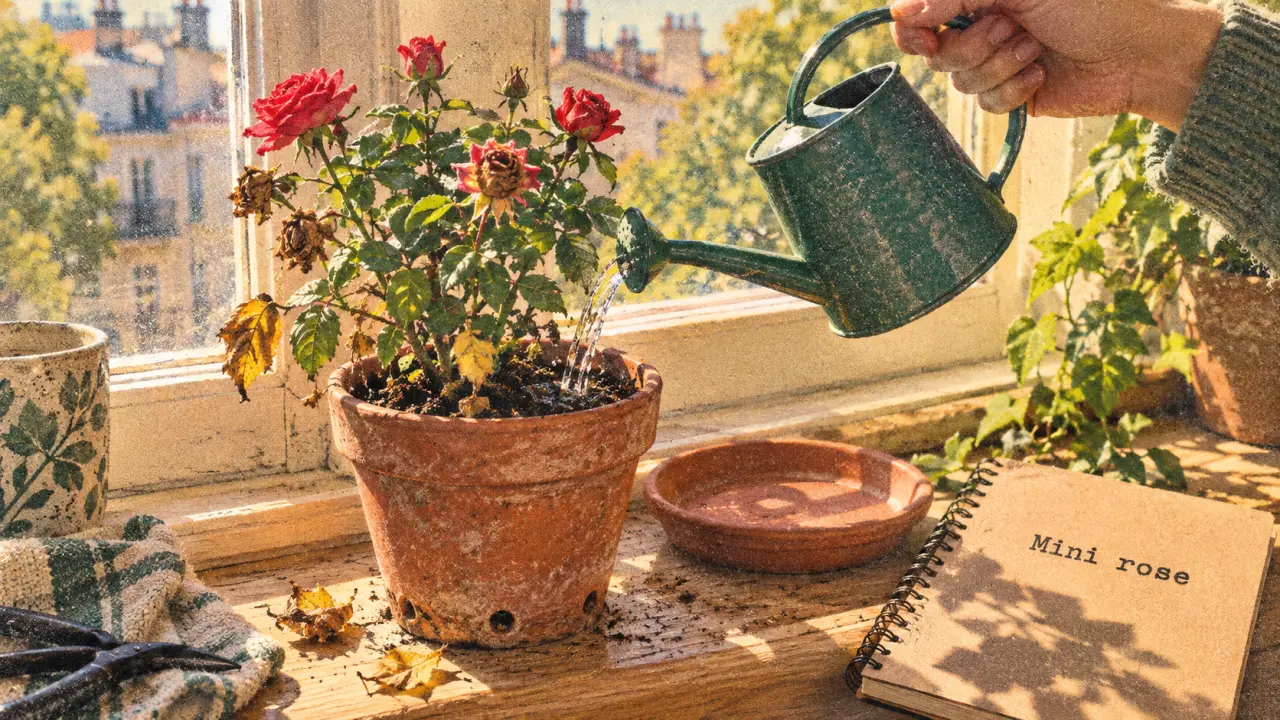
A miniature rose may look like a simple houseplant, but it still needs the conditions of a true rose: direct sunlight, careful watering, good air circulation, and regular grooming. With a bright position and a container that drains well, it can grow and flower indoors, on a patio, or later in the garden.
Give your mini rose the right daily conditions
The first step in caring for a mini rose bush is choosing the right location. Indoors, place it where it receives direct sun, ideally in a south- or west-facing window. Bright indirect light is usually not enough to support compact growth and repeated flowering.
Light, temperature, and rotation
Turn the pot once or twice a week so every side receives light. This prevents the stems from leaning sharply toward the window and helps the plant grow more evenly. Aim for daytime temperatures around 70°F, with nighttime temperatures at or above 60°F.
Keep the rose away from radiators, heating vents, and cold, drafty windows. Sudden changes in temperature can stress the plant, especially when it has recently moved from a store or greenhouse into your home.
Think of the window as a clock face. Light does not reach every part of the plant with the same intensity throughout the day. A weekly quarter-turn changes which stems face the strongest rays, helping the plant keep a balanced shape and improving air circulation between its leaves.
Water deeply, then let excess moisture leave
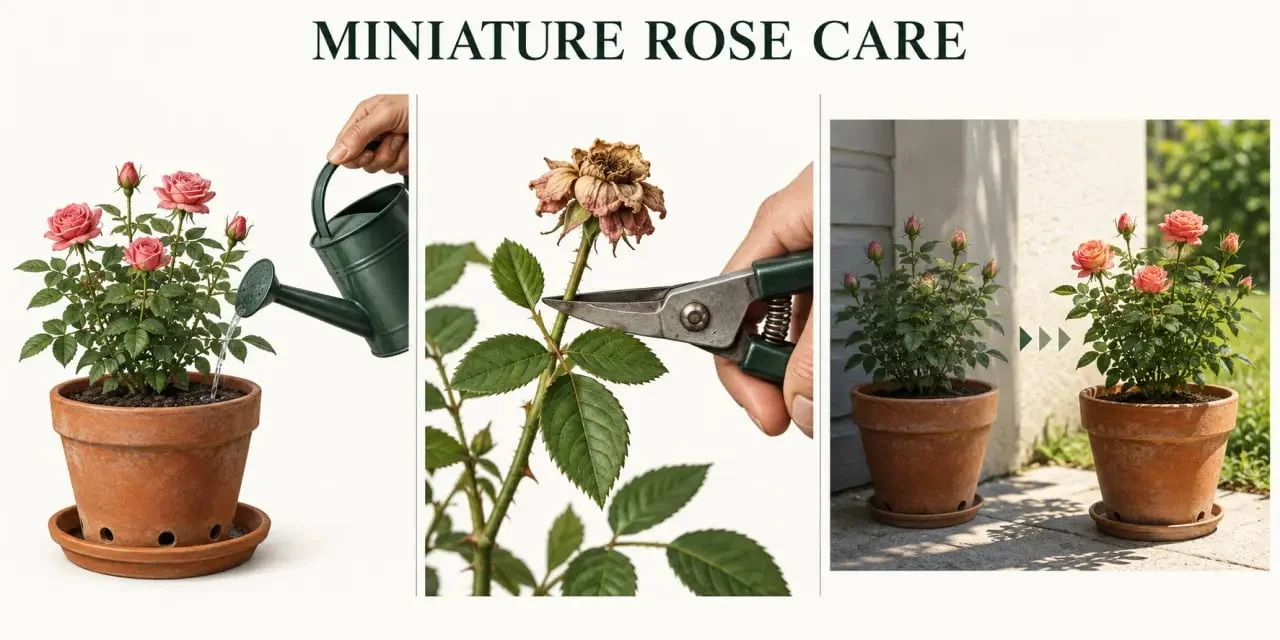
Miniature roses need consistent moisture, but their roots do not tolerate constantly wet soil. Test the surface with your finger before watering. When the top feels dry to the touch, water slowly until excess runs from the drainage holes. Empty the saucer afterward so the container never sits in water.
- Use a pot with drainage holes, not a decorative container with no outlet.
- Water the root zone instead of frequently misting the leaves.
- Check the soil more often in bright, warm conditions and less often during winter.
- Do not follow a rigid watering calendar. Light, temperature, and pot size all affect how quickly the soil dries.
Winter deserves particular attention because indoor conditions can slow evaporation. If the soil is still wet when you check it, wait rather than adding “just a little” water. Persistent sogginess is a common cause of indoor decline and can lead to yellow leaves.
Remove yellow leaves and dead growth, then review the plant’s drainage, light, and watering routine before deciding that it needs more fertilizer. Yellowing can have several causes, so look at the growing conditions as a whole.
Feed, deadhead, and repot for ongoing growth
During active growth, apply a dilute fertilizer solution once or twice a month. More fertilizer is not automatically better. A rose that is stressed, waterlogged, or growing in low light cannot use extra nutrients effectively. If the soil is dry, water first, then apply the diluted fertilizer according to the product directions.
Remove fading flowers correctly
Deadhead the blooms as they fade. Follow the flower stem down to the uppermost leaf made of five leaflets, then cut just above that leaf. This keeps the plant tidy and encourages it to put energy into new growth and additional blooms.
Pick up spent petals that have fallen onto the soil, particularly when several plants share a small indoor pot. Keeping the surface clear makes routine inspection easier and prevents old plant material from accumulating around the stems.
Know when the pot is too small
Many store-bought miniature roses contain several young plants grouped in one small container. Repot when the roots are crowded, water runs through the pot unusually quickly, or growth stalls despite suitable care. Move the rose into the next container size with fresh potting soil.
A slightly larger pot gives the roots more room without leaving a large volume of wet soil around them. If several plants are clearly separate, you can gently divide them during repotting. Handle the roots carefully and make sure the new container drains freely.
Catch pests and stress before they spread
Inspect the rose whenever you water it, paying close attention to the undersides of the leaves and the points where stems join. Spider mites are a frequent indoor problem. Fine webbing, pale or mottled leaves, and a dull-looking plant are warning signs.
Isolate an affected pot from nearby plants and treat it with insecticidal soap. Several applications may be necessary. Continue checking the plant after treatment so you can respond if symptoms return or appear on another rose.
| What you notice | First checks to make |
|---|---|
| Yellowing leaves | Check for wet soil, poor drainage, and dead growth. |
| Few flowers or weak stems | Increase direct sunlight and remove faded blooms. |
| Fine webbing and mottled leaves | Inspect for spider mites and use insecticidal soap as needed. |
| Leaf drop after a move | Review temperature changes, drafts, and sudden shifts in light. |
Move it outdoors without shocking the plant
A miniature rose can spend the warm season on a sunny patio, deck, or in a garden bed, but it needs time to adjust. When outdoor conditions are suitable, begin in a shady, sheltered spot. Increase its sun exposure gradually over several days instead of moving an indoor-grown plant straight into full sun.
This process, called hardening off, reduces sun stress and leaf damage. Watch the plant during the transition and avoid exposing it to a sudden change in both light and temperature.
For permanent garden planting, choose a sunny site with fertile, well-drained soil. Keep checking the moisture while the rose establishes, since container plants and newly planted roses can dry out faster than expected.
Whether you keep the rose indoors or move it outside for part of the year, the routine remains straightforward: provide direct sun, let excess water drain away, water when the soil surface dries, feed sparingly, and remove fading flowers or damaged leaves promptly.
{“@type”:”Article”,”@context”:”https://schema.org”,”headline”:”Care for a Mini Rose Bush Indoors: Give It Sun, Dry Soil, and Room to Bloom”,”inLanguage”:”en-US”,”description”:”A miniature rose may look like a simple houseplant, but it still needs the conditions of a true rose: direct sunlight, careful watering, good air circulation, and regular…”}
Observe the plant before changing the routine
Rose and garden advice depends on climate, soil drainage, sunlight, airflow and the age of the plant. Before pruning, feeding or spraying, look at the leaves, stems, buds and surrounding soil. A rose in a windy dry spot needs different care from one growing in humid shade, even when the symptoms look similar at first glance.
Avoid applying several treatments at once. Water correctly, remove damaged growth, improve airflow and identify pests or disease before reaching for a spray. A measured response protects beneficial insects and helps the plant recover without unnecessary stress.
Related guides to continue
To build a stronger understanding of this topic, continue with these related guides from the same site. They cover nearby decisions, maintenance points and practical details that often influence the final result.