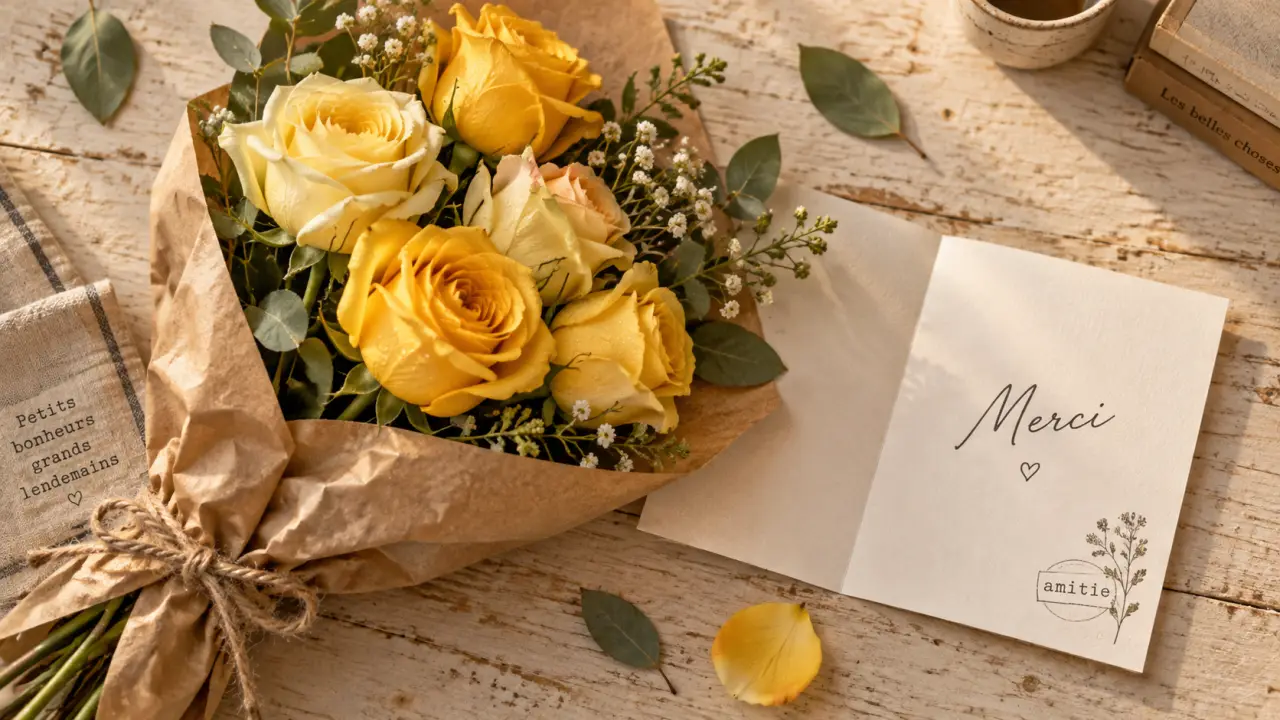
A yellow rose usually expresses friendship, joy, gratitude, and encouragement. It is a cheerful choice when you want to show appreciation without the intense romantic message often associated with red roses. The meaning still depends on the recipient, occasion, shade, and cultural background.
The modern yellow rose meaning at a glance
In today’s language of flowers, yellow roses are mainly associated with friendship and platonic affection. Their sunny colour also suggests happiness, optimism, warmth, and celebration. A bouquet can say, “I am glad you are in my life,” “Congratulations,” or “Thank you for being there,” without automatically suggesting romance.
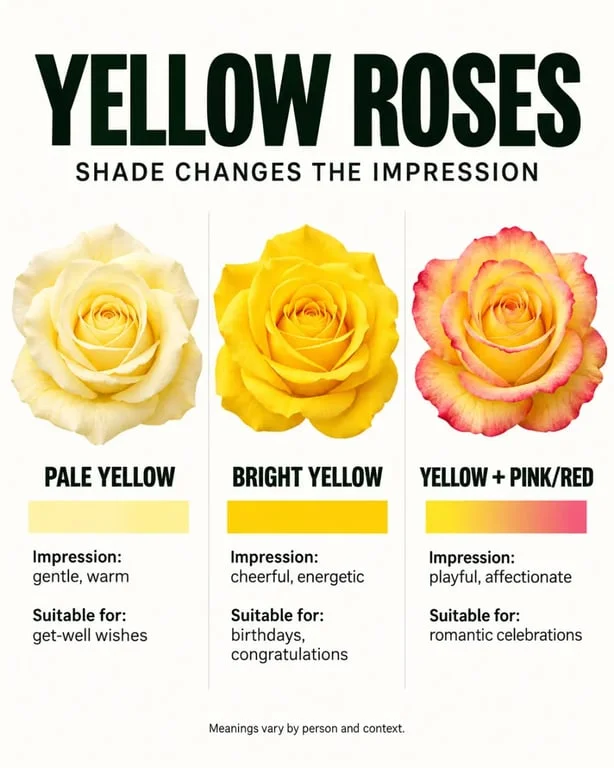
Yellow roses suit positive occasions such as a birthday, a new job, a housewarming, a recovery period, or the beginning of a friendship. Their message feels open and uplifting rather than solemn or intensely personal.
- Friendship: loyal, uncomplicated affection and shared happiness.
- Gratitude: appreciation for help, support, or kindness.
- Joy: a bright gesture for celebrations and good news.
- Hope: encouragement during a transition or difficult period.
- New beginnings: a fresh start in personal or professional life.
Do yellow roses mean friendship or love?
Usually, yellow roses communicate friendship more clearly than romantic love. This makes them a reassuring choice for a close friend, colleague, neighbour, or family member. They can express genuine affection, but that affection is generally understood as warm and supportive rather than passionate.
In a romantic relationship
A yellow rose does not automatically mean that romance is absent. When one partner gives yellow roses to the other, the flowers can represent the happy, companionable side of the relationship: shared laughter, trust, and optimism about what comes next. However, yellow roses alone may feel ambiguous if you want to send an unmistakably romantic message. Pairing them with red or pink roses makes the intention clearer.
Why the presentation matters as much as the colour
The colour of the roses is only one part of the message. The card, timing, number of flowers, and setting also shape how the recipient interprets the gift. A small bunch left on a colleague’s desk may read as appreciation, while a carefully arranged bouquet delivered for an anniversary may suggest affectionate romance.
This wider context helps prevent the colour from being interpreted in isolation. The same yellow rose can carry a different meaning depending on the relationship and the occasion.
From Victorian jealousy to today’s cheerful symbolism
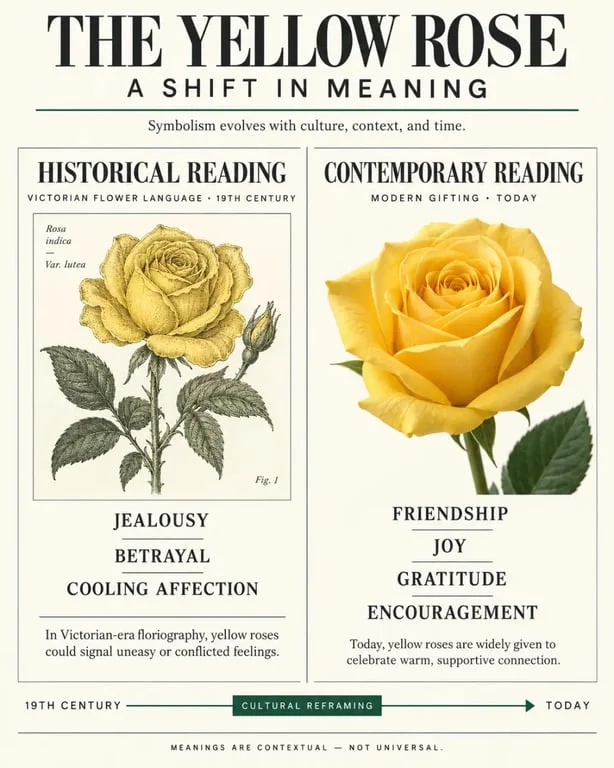
Yellow roses have not always carried such positive associations. In Victorian-era flower symbolism, they could be linked with jealousy and betrayal. This older meaning explains why some people still wonder whether a yellow bouquet has a hidden negative message.
For most modern recipients, the more common interpretation is positive: friendship, joy, appreciation, and encouragement. Unless the sender is deliberately referring to historical floriography, there is little reason to treat yellow roses as a warning or accusation. The relationship and the accompanying message usually matter more than this older symbolic code.
How culture and shade refine the message
Symbolism changes across cultures, so consider the recipient’s background when flowers are being sent for an important occasion. In Western Europe and North America, yellow roses are widely associated with friendship and joy. In Japan, yellow flowers, including roses, may also evoke harmony, prosperity, inner peace, courage, and modesty.
Shade adds another layer of meaning. These associations are gentle guidelines rather than strict rules, but they can help you choose a bouquet more intentionally.
| Type of yellow rose | Common impression | Best suited to |
|---|---|---|
| Pale yellow | Soft joy, optimism, tenderness | A thoughtful thank-you, gentle encouragement, or new beginning |
| Bright yellow | Friendship, energy, hope | Birthdays, congratulations, and cheerful celebrations |
| Yellow mixed with red or pink | Warm affection with a more romantic note | A partner or someone with whom romance is clearly established |
When yellow roses are the right gift
Yellow roses work well when you want the gesture to feel positive, personal, and low-pressure. They are especially useful when red roses might feel too intense or send the wrong signal.
- For a friend: celebrate a birthday, achievement, move, or simply brighten their week.
- For a colleague: say thank you after a project, congratulate a promotion, or mark a farewell warmly.
- For someone recovering: offer brightness and encouragement without the heavy formality of sympathy flowers.
- For a partner: celebrate the friendship within your relationship, ideally with a note that adds personal meaning.
For an apology, condolence, or reconciliation, yellow roses may not be the clearest choice on their own. A heartfelt note and flowers selected with the relationship in mind will communicate more precisely than colour symbolism alone. When you are unsure, let your words explain the intention and allow the yellow roses to add warmth, optimism, and light.
{“@type”:”Article”,”@context”:”https://schema.org”,”headline”:”Yellow Roses Mean Friendship First, With Cultural and Romantic Nuance”,”inLanguage”:”en-US”,”description”:”A yellow rose usually expresses friendship, joy, gratitude, and encouragement. It is a cheerful choice when you want to show appreciation without the intense romantic message…”}
Observe the plant before changing the routine
Rose and garden advice depends on climate, soil drainage, sunlight, airflow and the age of the plant. Before pruning, feeding or spraying, look at the leaves, stems, buds and surrounding soil. A rose in a windy dry spot needs different care from one growing in humid shade, even when the symptoms look similar at first glance.
Avoid applying several treatments at once. Water correctly, remove damaged growth, improve airflow and identify pests or disease before reaching for a spray. A measured response protects beneficial insects and helps the plant recover without unnecessary stress.
Related guides to continue
To build a stronger understanding of this topic, continue with these related guides from the same site. They cover nearby decisions, maintenance points and practical details that often influence the final result.