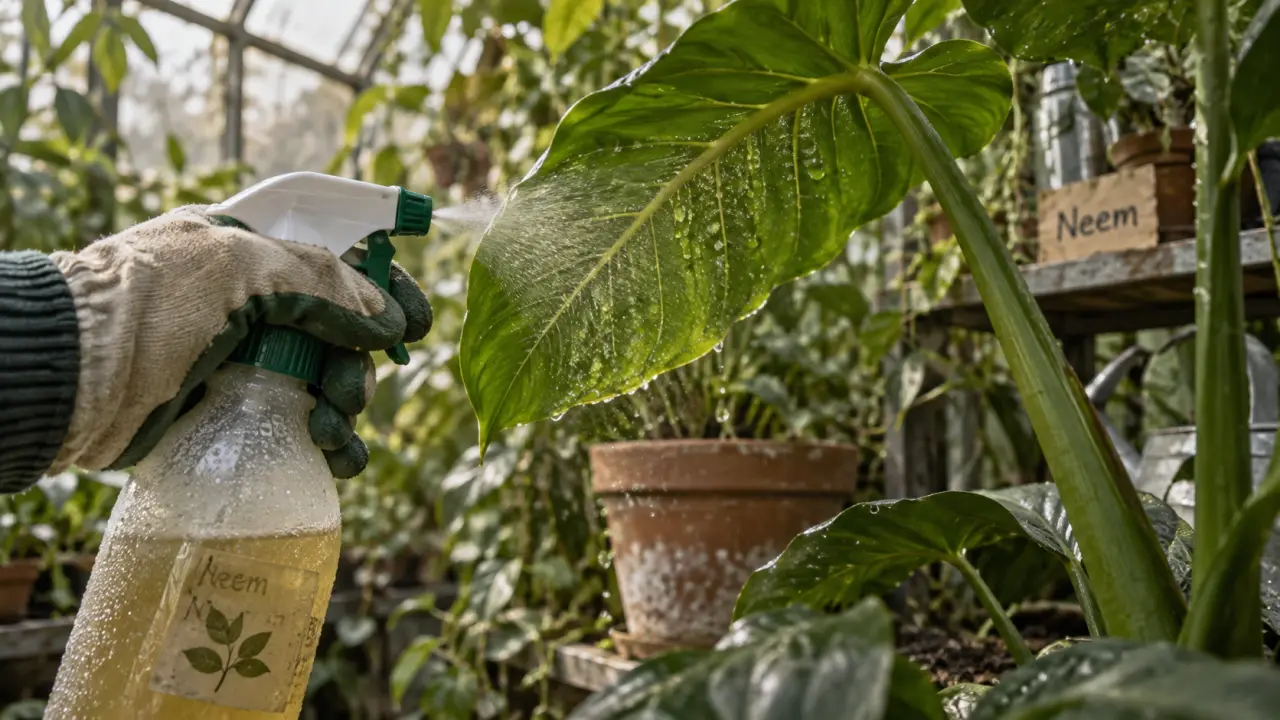
Neem Oil Spray: When It Helps, How to Apply It, and Where It Falls Short
A neem oil spray can help limit pest activity without immediately using a stronger treatment. It works best as a preventive measure or an early response, provided the product suits your plants, the leaves are covered properly, and you monitor the foliage afterward.
What a neem oil spray can realistically do
Neem-based products are used on houseplants and garden plants to discourage certain pests, including small sap-feeding insects and gnats around indoor plants. They are not a one-spray solution. Results depend on the pest, its life stage, the coverage of the plant, and how established the infestation is.
Some formulas contain azadirachtin, a neem-derived compound often described as an insect growth regulator. In simple terms, it may interfere with pest development and feeding rather than acting as an instant contact killer. Other products rely mainly on oil, which must touch the target to have an effect. Always read the label: two bottles sold as neem oil spray may contain different active ingredients and require different application methods.
- Best use: early signs of pests, routine prevention, and treatment of isolated plants.
- Less reliable use: a severe infestation spreading across several plants.
- Important limit: eggs, larvae, and adult insects may not respond in the same way.
Choose the spray for the problem, not the promise
A ready-to-use neem oil spray is practical for beginners because it avoids dilution errors. Concentrated products offer more flexibility but require careful mixing, including the correct emulsifier when the label calls for one. Convenience matters, but the label should guide your choice. Check which plants, pests, indoor uses, and application intervals are listed.
| Situation | What neem spray may contribute | What to add or consider |
|---|---|---|
| One affected houseplant | Targeted leaf treatment and monitoring | Isolate the plant and inspect nearby pots |
| Recurring gnats | Support for foliage care when relevant | Address damp potting mix and breeding conditions |
| Visible heavy infestation | Part of a repeated treatment plan | Remove heavily affected material and consider a pest-specific option |
| Preventive care | Occasional treatment when the product label permits it | Avoid spraying simply out of habit |
With gnats, the visible adults are only part of the problem. A leaf spray does not automatically address what is happening in the potting mix. Do not improvise a soil drench. Use one only when the exact product directions explicitly allow it.
Apply neem oil spray without damaging the leaves
Cover the areas where pests hide
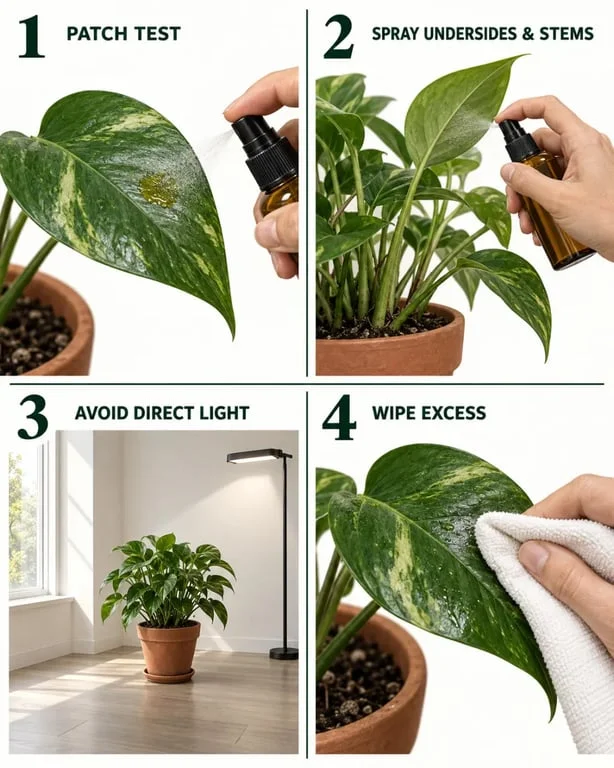
Many pests shelter beneath leaves, along stems, and at leaf joints. Spray the upper surface lightly, then reach the undersides without soaking the plant until it drips. On broad, sturdy leaves, a clean microfiber cloth can help spread excess product evenly and remove visible insects. Avoid rubbing fuzzy, fragile, or newly unfurled foliage.
Test first and choose the right conditions
Test the product on one small, inconspicuous area and wait before treating the entire plant. Do not spray in direct sun, under high heat, or when a grow lamp is close enough to warm the leaves. Oil droplets can act like tiny lenses and create concentrated hot spots. A leaf that looks fine in the shade may develop scorched patches when light and warmth increase. Cooler, lower-light conditions give the coating time to settle more evenly.
- Check the label for plant and pest compatibility.
- Move the plant away from direct sun and strong lamps.
- Spray the stems, leaf tops, and especially the leaf undersides.
- Wipe pooled liquid from sturdy leaves if needed.
- Monitor the leaves and pest activity over the following days.
- Repeat only at the interval stated on the label. Every two weeks is a common schedule for some products, not a universal rule.
Indoor use: smell, ventilation, and sensitive plants
Neem oil has a distinctive, earthy smell. Some ready-to-use products contain peppermint, but the fragrance may still linger for 1 to 2 days. Use the spray in a ventilated room, protect nearby furniture from overspray, and keep children and pets away until the product has dried according to its instructions.
“Natural” does not mean suitable for every plant or every setting. Delicate foliage, stressed plants, recently repotted plants, and leaves already damaged by heat or drought need extra caution. A pothos may tolerate a treatment well while another houseplant reacts poorly. Yellowing, translucent spots, curling, or new blotches after use are reasons to stop and reassess.
Make neem part of a smarter pest routine
Neem oil spray works best when it supports observation. Inspect new plants before bringing them close to your collection, remove dead leaves, avoid keeping potting mix constantly wet, and check the undersides of leaves each week. These simple habits can reduce the chance that a minor issue becomes an active infestation.
If pest numbers continue to rise after correctly timed applications, do not simply spray more often. Identify the pest again, check whether the product is intended for it, and consider another suitable control method if necessary. The practical question is whether neem oil matches your pest, your plant, and the conditions in which you apply it.
{“@type”:”Article”,”@context”:”https://schema.org”,”headline”:”Neem Oil Spray: When It Helps, How to Apply It, and Where It Falls Short”,”inLanguage”:”en-US”,”description”:”Neem Oil Spray: When It Helps, How to Apply It, and Where It Falls Short A neem oil spray can help limit pest activity without immediately using a stronger treatment. It works…”}
Observe the plant before changing the routine
Rose and garden advice depends on climate, soil drainage, sunlight, airflow and the age of the plant. Before pruning, feeding or spraying, look at the leaves, stems, buds and surrounding soil. A rose in a windy dry spot needs different care from one growing in humid shade, even when the symptoms look similar at first glance.
Avoid applying several treatments at once. Water correctly, remove damaged growth, improve airflow and identify pests or disease before reaching for a spray. A measured response protects beneficial insects and helps the plant recover without unnecessary stress.
Related guides to continue
To build a stronger understanding of this topic, continue with these related guides from the same site. They cover nearby decisions, maintenance points and practical details that often influence the final result.