Yes, you can grow a rose plant from seeds, but the process is slow and results are unpredictable. The seeds come from rose hips, need careful cleaning, and often germinate more reliably after a period of cold, moist storage. You may not get a copy of the parent rose, but you could raise a completely new plant with its own flower colour, scent, growth habit, and disease resistance.
Start with ripe rose hips and realistic expectations
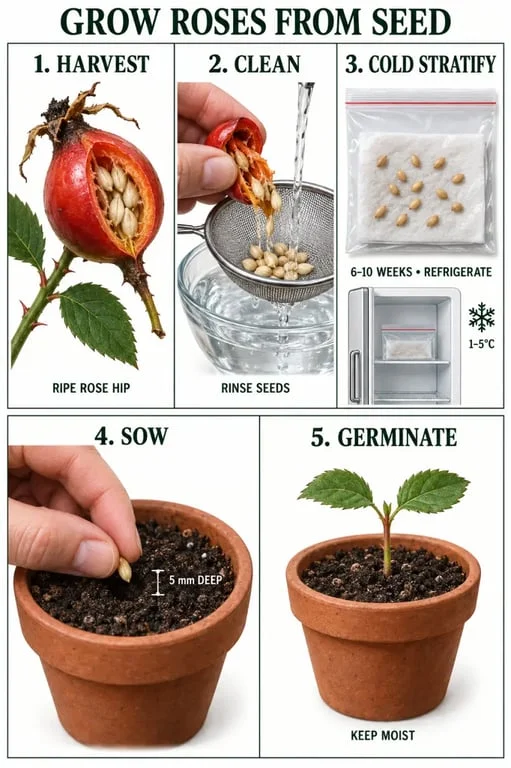
A rose hip is the fruit that forms after a flower has been pollinated. To collect seeds, leave selected blooms on the bush instead of deadheading them. The hips typically need about four months on the plant to mature properly. Harvest them when they feel firm rather than rock-hard and have reached their mature red, orange, or yellow colour, depending on the rose.
Seed-grown roses are not usually clones of the parent plant. This is particularly true of hybrid roses, because each seed carries a new genetic combination. A seedling may have a different flower colour, fragrance, growth habit, level of disease resistance, or number of thorns. Some young plants may be weak or unremarkable, while others can produce surprisingly attractive flowers. If your goal is an exact copy of a favourite rose, cuttings or grafted plants are more reliable.
Prepare the seeds without encouraging mould
Extract, rinse, and label each batch
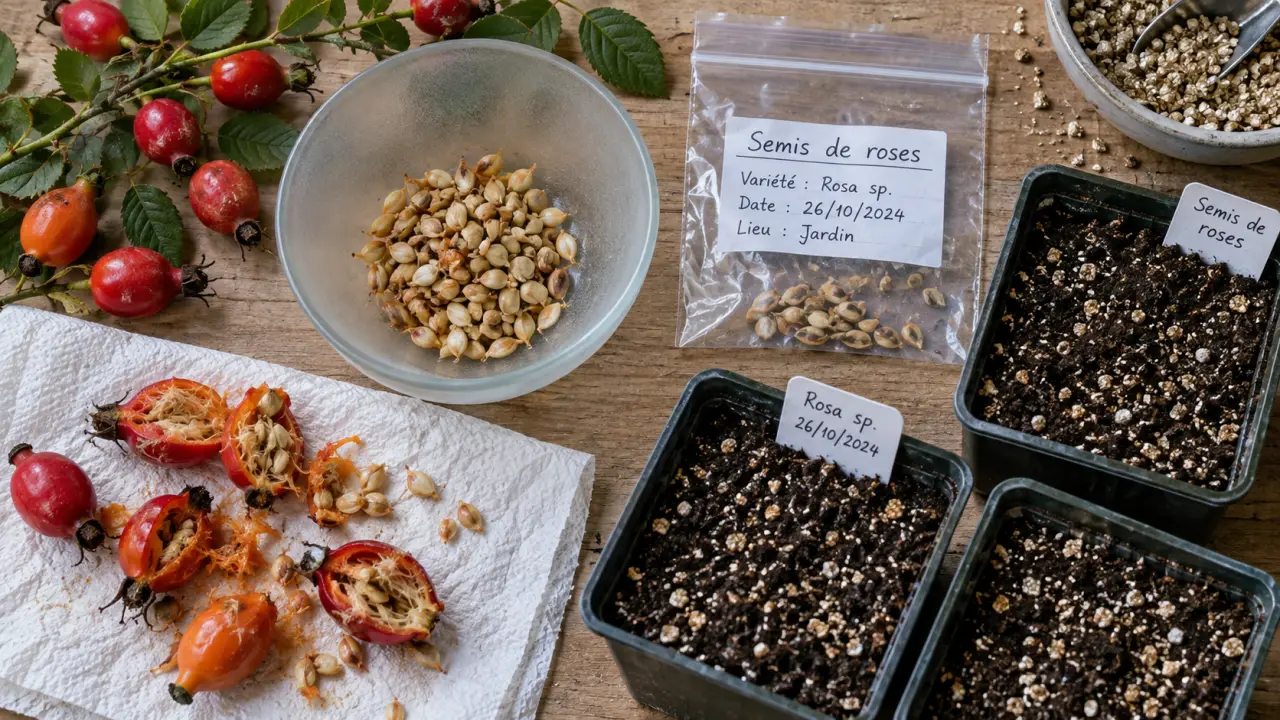
Cut the rose hip open with a clean knife and remove the seeds. Rinse away every trace of fruit pulp, since leftover flesh can encourage fungal growth during storage. A brief soak in clean water for 12 to 24 hours can loosen stubborn pulp. Handle the seeds gently with tweezers, and keep batches separate when they come from different roses.
Labelling is essential for a project that can last several months. Write the rose name and collection date on each bag or tray. If you deliberately cross-pollinated flowers, record both the seed parent and the pollen parent. This information helps you identify the origin of each seedling and prevents different batches from being mixed up.
Use simple, clean materials
- Ripe rose hips and a clean knife
- Tweezers, paper towel, and a permanent marker
- Small zippered bags or lidded containers
- Seed-starting mix, vermiculite, and small pots or seed trays
- A clear label for every sowing batch
Do not rely too heavily on a float test. Seeds that sink may be viable, but floating does not prove that a seed cannot germinate. Rather than discarding seeds after one quick test, plant a reasonable number of clean seeds. This gives you a more useful indication of the batch’s viability.
Give rose seeds the cold stratification they expect
Many rose seeds germinate better after cold stratification, a cool, moist resting period that imitates winter. Place the cleaned seeds between lightly damp paper towels, seal them in a labelled bag, and store the bag in the refrigerator. The towel should feel moist, not wet enough to release water when pressed.
This stage helps manage seed dormancy. In nature, a rose hip falls onto leaf litter, where moisture, cold, and time affect the seeds. The same sequence can be recreated indoors. Moisture helps prepare the seed, while the cold period signals that winter has passed. Clean materials and controlled moisture also reduce the risk that the enclosed environment will become a mould trap.
A cold period of around three months is commonly used. Check the bag weekly. If you see mould, replace the towel and rinse the affected seeds before returning them to fresh, lightly damp material. Plant any seeds that begin to sprout rather than leaving them chilled for longer. Too much time in the refrigerator can result in fragile, premature shoots.
Sow shallowly, then protect emerging seedlings
Once stratification is complete, fill clean pots or trays with a light, well-drained mix. A blend of 50% sterile potting soil and 50% vermiculite retains moisture without becoming dense. Sow each seed about one-half inch deep, cover it lightly, and water gently so the mix settles around the seed without compacting it.
Place the containers in bright light at roughly 65 to 70 degrees. Keep the growing medium evenly moist, but never leave the pots sitting in water. Germination can take 6 to 10 weeks, and some seeds may not emerge at all. Check the containers regularly, but avoid frequent watering when the surface is still damp.
As seedlings appear, give them enough space and air circulation to limit the risk of damping-off disease. This condition can cause young plants to collapse at soil level. A sterile mix, careful watering, and clean containers help reduce that risk. Keep the seedlings in bright conditions without allowing the growing medium to become waterlogged.
Avoid the mistakes that lose young rose plants
| Problem | Likely cause | Practical response |
|---|---|---|
| White mould on seeds | Wet towels or fruit residue | Rinse the seeds, use a fresh damp towel, and improve cleanliness. |
| Seedlings collapse at soil level | Damping-off disease and poor air circulation | Use sterile mix, avoid overwatering, and space pots apart. |
| No germination | Seeds may be dormant or non-viable | Allow more time and try a new batch next season. |
| Weak growth after sprouting | Low light or a waterlogged mix | Move the plants into brighter conditions and improve drainage. |
When seedlings have several true leaves and a stronger root system, transplant them individually. Handle the roots carefully and keep the new pots evenly moist while the plants settle. Before planting outdoors, introduce outdoor conditions gradually rather than moving the seedlings straight into a new environment. Choose a sunny, well-drained garden position.
Flowering may take two or even three years. The first bloom may not resemble the parent rose, which is normal for plants grown from seed. The process rewards patience: every healthy seedling offers the possibility of a new rose, even when the final result cannot be predicted from the original flower.
{“@type”:”Article”,”@context”:”https://schema.org”,”headline”:”Growing Roses from Seed Takes Patience, but Cold Stratification Improves Your Chances”,”inLanguage”:”en-US”,”description”:”Yes, you can grow a rose plant from seeds, but the process is slow and results are unpredictable. The seeds come from rose hips, need careful cleaning, and often germinate more…”}
Observe the plant before changing the routine
Rose and garden advice depends on climate, soil drainage, sunlight, airflow and the age of the plant. Before pruning, feeding or spraying, look at the leaves, stems, buds and surrounding soil. A rose in a windy dry spot needs different care from one growing in humid shade, even when the symptoms look similar at first glance.
Avoid applying several treatments at once. Water correctly, remove damaged growth, improve airflow and identify pests or disease before reaching for a spray. A measured response protects beneficial insects and helps the plant recover without unnecessary stress.
Related guides to continue
To build a stronger understanding of this topic, continue with these related guides from the same site. They cover nearby decisions, maintenance points and practical details that often influence the final result.