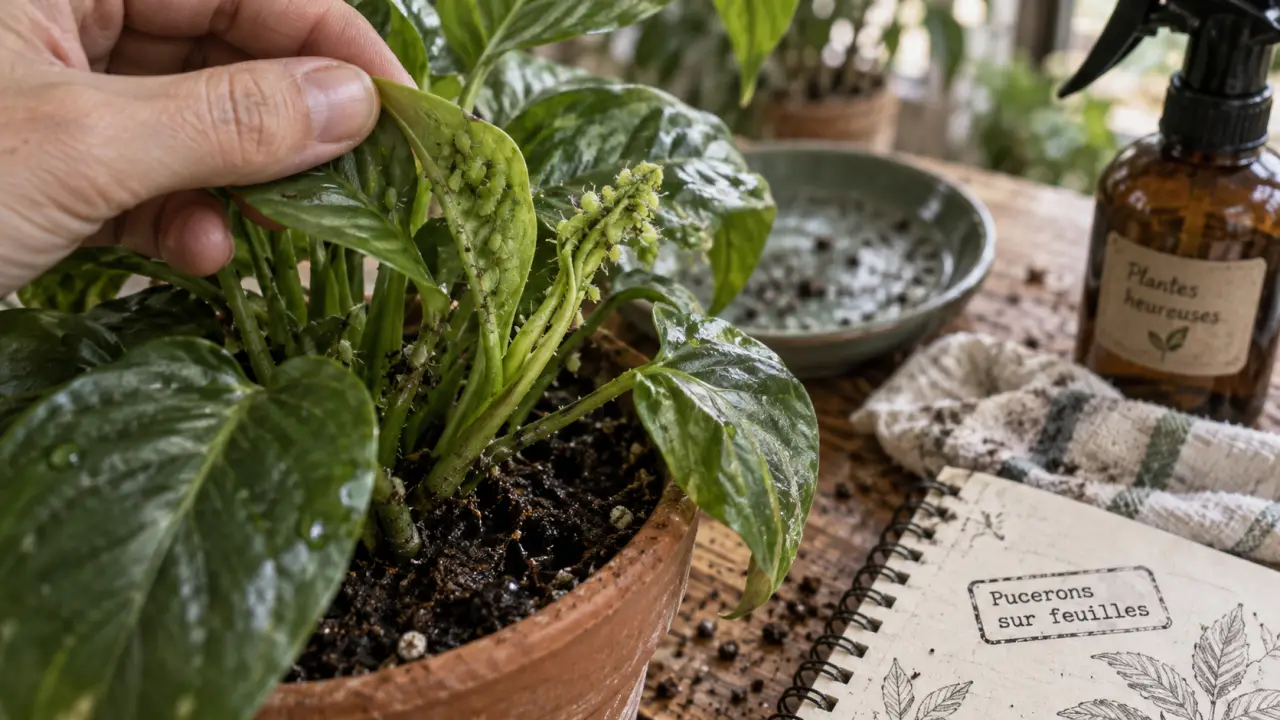
Aphids on plants can go unnoticed until sticky leaves, curled tips, and weak new growth appear. These small, sap-sucking insects gather on tender shoots, beneath leaves, and around flower buds. Inspecting the plant early makes control much easier and helps prevent the colony from spreading to nearby plants.
Confirm that aphids are causing the damage
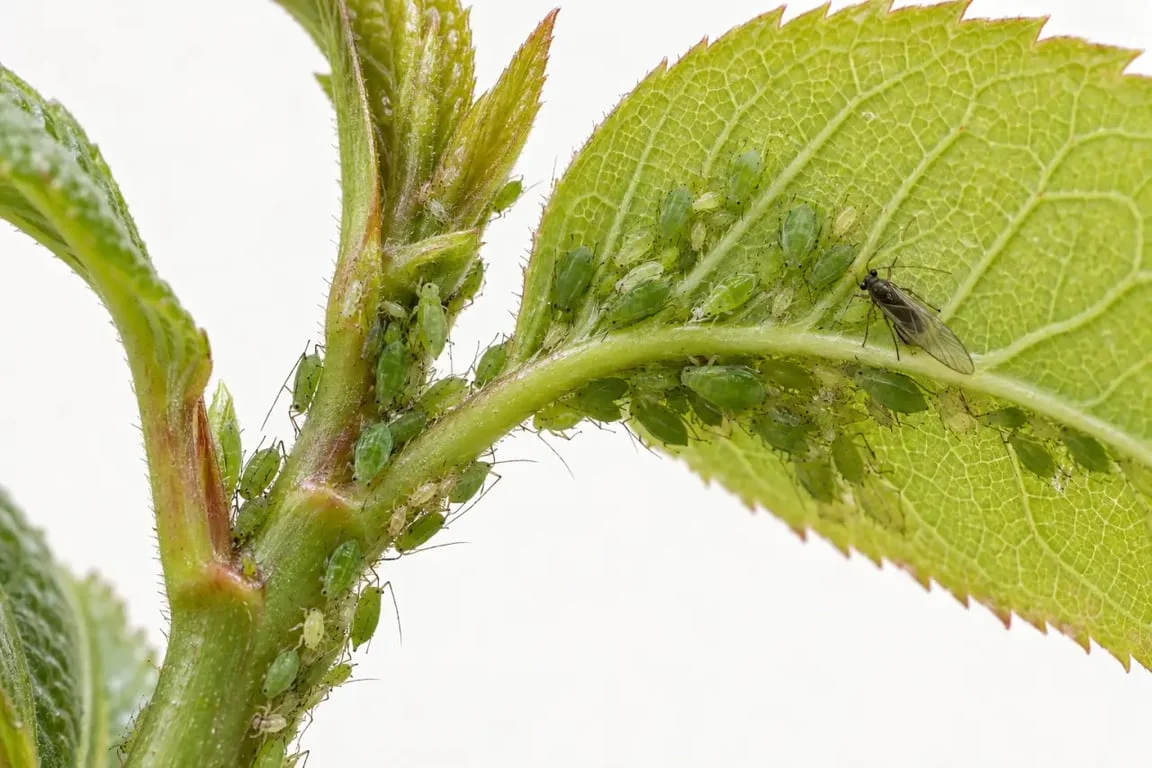
Aphids are small, soft-bodied insects with a rounded, pear-like shape. Depending on the species and host plant, they may be green, black, yellow, brown, red, or gray. Most are wingless, but winged aphids can appear when a colony becomes crowded or needs to move to another plant.
Look where aphids prefer to feed
Start with the newest leaves, flower buds, growing tips, and undersides of leaves. Aphids use piercing mouthparts to draw sap from tender plant tissue. You will often see a cluster rather than a single insect, sometimes with smaller young aphids called nymphs nearby.
Check leaf joints and folded foliage as well. These protected areas can shelter aphids from a quick spray. On indoor plants, inspect the stems and the point where leaves meet the main stem. On outdoor plants, examine tender shoots and buds before looking over older leaves.
Read the plant’s warning signs
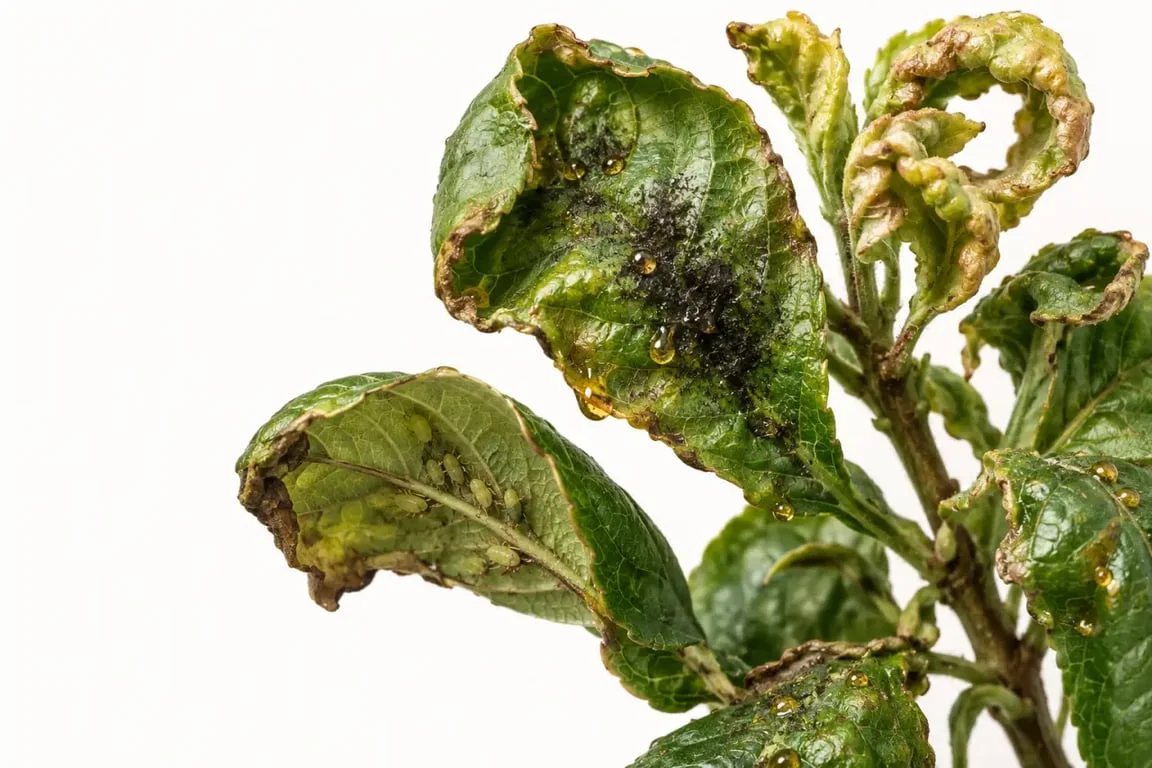
Aphid feeding can cause yellowing leaves, curling or twisted growth, stunted shoots, and leaf drop. A particularly useful clue is honeydew, a clear, sugary, sticky coating that may appear on leaves, pots, windowsills, or furniture beneath the plant.
Honeydew can attract ants and encourage sooty mold, a dark surface growth that reduces the light reaching the leaf. Sooty mold does not bite into the plant, but it indicates that sap-feeding insects need attention. If you see both sticky residue and clustered insects on fresh growth, aphids are a likely cause.
Stop the infestation with a thorough 3-step reset
Isolate the affected plant before treating it, especially if it is a houseplant. Aphids can spread to nearby plants, and moving the plant gives you enough space to inspect it properly. Treat it when it is out of intense direct sun, since wet leaves and some products are more likely to scorch in strong light.
- Rinse the colony away. Use a gentle but steady stream of water on the stems and both sides of the leaves. Support delicate foliage with your hand. Concentrate on growing tips, leaf joints, and the undersides of leaves. This can greatly reduce a light infestation.
- Wipe the hidden areas. Use a damp cloth to clean the leaves, stems, leaf joints, and rim of the pot. Wiping removes aphids that remain after rinsing and clears away honeydew, making new insects easier to spot.
- Use a contact treatment if needed. Insecticidal soaps and summer oils can help when the product reaches the insects directly. Follow the label exactly, test the product on a small area first, and do not treat a stressed or wilted plant.
Keep the plant’s saucer, pruning tools, and cleaning cloth separate while you treat it. Clean them before using them on other plants. This simple separation reduces the risk of carrying overlooked aphids or sticky honeydew to healthy plants.
Choose the method that fits your plant and infestation
| Method | Best use | Key limitation |
|---|---|---|
| Water spray and wiping | Light, early colonies on sturdy foliage | Must reach undersides and growing points |
| Insecticidal soap | Visible aphids on indoor plants, ornamentals, or edible crops when the label allows it | Works on contact, so missed insects can survive |
| Summer oil | Persistent colonies where a labeled oil is suitable | Can burn foliage if used incorrectly or in unsuitable conditions |
| Systemic granules | Situations where the product label specifically supports their use | Requires careful label review and is not the first choice for every plant |
A stronger mixture is not automatically more effective. Overapplying soap, oil, or insecticide can damage foliage without improving control. For a plant with badly distorted tips, pruning the worst affected growth may reduce hiding places, provided the plant can tolerate the loss.
Outdoors, lady beetles and lacewings feed on aphids. Broad treatments can also remove these beneficial insects, so use them carefully. Choose a product approved for the plant and follow its instructions rather than combining several treatments at once.
Follow up before the colony rebuilds
Aphids reproduce quickly, so one treatment rarely ends the problem. Inspect the plant every 2–3 days for around a week. Repeat physical removal or the chosen labeled treatment when live aphids are present. After that, check the plant once per week for a month. Monthly inspections are useful maintenance for plants that have had repeated infestations.
Look at the youngest growth first. Older damaged leaves may not straighten or regain their color, but clean new growth is a practical sign that the infestation is under control. If aphids return immediately despite careful treatment, inspect neighboring plants and nearby windows. The original source may still be present, particularly if a new plant or one recently brought indoors was involved.
Make aphids less likely to return
Indoor outbreaks often begin with a new plant, a plant brought inside after time outdoors, or winged aphids entering through open doors and windows. Prevention relies mainly on regular inspection and quarantine rather than a complicated treatment program.
- Examine new plants before placing them near your existing collection.
- Quarantine new plants and those returning from outdoors, then inspect the undersides of their leaves closely.
- Check tender shoots, buds, and leaf joints during your regular watering routine.
- Remove heavily infested leaves or shoots promptly when pruning is suitable for the plant.
- Clean sticky honeydew from pots, shelves, and nearby foliage so signs of a new outbreak remain visible.
- Keep plants in conditions suited to their needs. A plant stressed by poor light or watering is harder to monitor and recover.
Aphids are common plant pests, not a sign that you have failed as a gardener. Careful inspection, complete treatment coverage, and a short follow-up routine can bring most home infestations under control before they cause lasting damage.
{“@type”:”Article”,”@context”:”https://schema.org”,”headline”:”Aphids on Plants Need Early Action: Spot the Signs and Break the Infestation”,”inLanguage”:”en-US”,”description”:”Aphids on plants can go unnoticed until sticky leaves, curled tips, and weak new growth appear. These small, sap-sucking insects gather on tender shoots, beneath leaves, and…”}
Related guides to continue
To build a stronger understanding of this topic, continue with these related guides from the same site. They cover nearby decisions, maintenance points and practical details that often influence the final result.