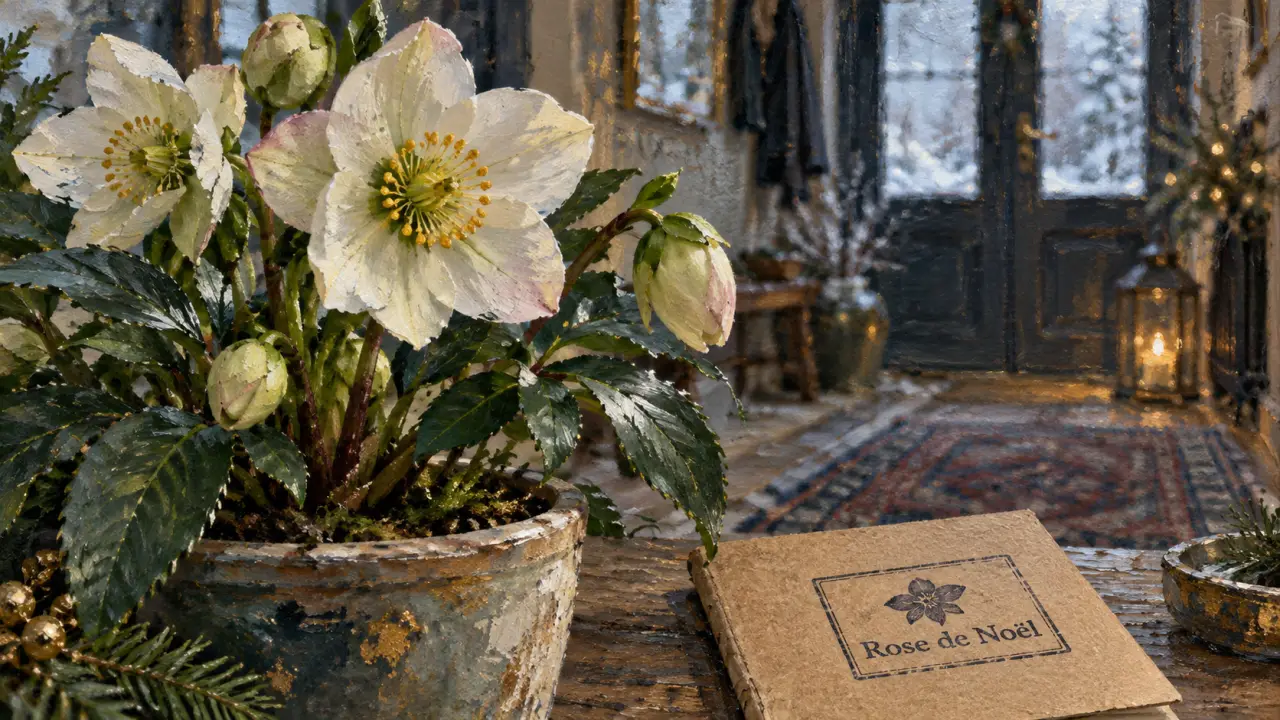
A Christmas rose plant brings white, pink-flushed or pale green flowers to the darkest part of the year. Despite its name, it is not a rose but a winter-blooming hellebore. You can display it indoors during the holidays, then plant it outside as a long-lived perennial.
What a Christmas rose plant really is
The name Christmas rose usually refers to Helleborus niger, a perennial in the buttercup family. Its flowers have five broad, petal-like sepals around a cluster of stamens. This simple, open shape explains the comparison with wild roses. The foliage is generally deep green, leathery and divided into narrow leaflets.
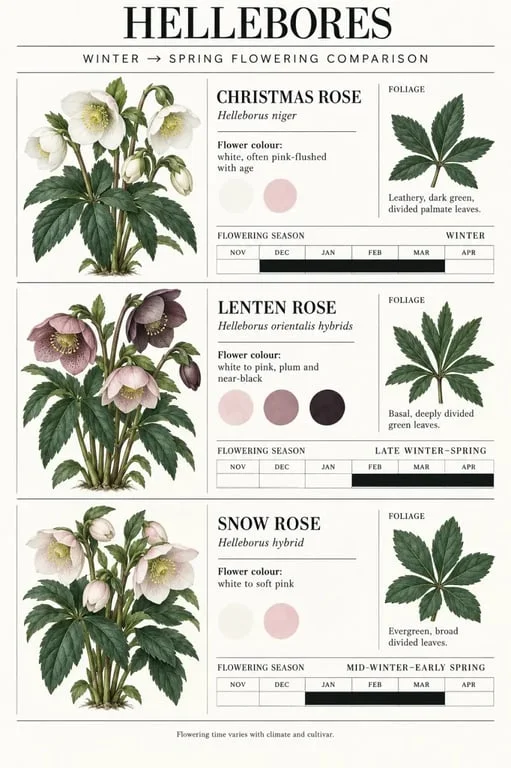
Unlike true roses, Christmas roses do not grow on thorny stems and do not belong to the genus Rosa. They are hellebores, valued for flowering from winter into very early spring, when many garden borders are quiet. The common name refers to their traditional flowering period and their association with Christmas folklore, not to their botanical family.
Why it flowers when the garden is quiet
A Christmas rose is adapted to cool winter weather. Established plants can tolerate frost and may flower while snow is still present, although the blooms can droop in harsh conditions. This winter display works well near an entrance, beside a shaded path or in a bed that can be viewed from indoors.
Christmas rose versus Lenten rose
| Plant | Botanical group | Typical flowering window | Useful distinction |
|---|---|---|---|
| Christmas rose | Helleborus niger | Winter to very early spring | Often white and associated with the holiday season |
| Lenten rose | Usually Helleborus orientalis hybrids | Late winter to spring | Often available in a broader range of colours |
| Snow rose | Hellebore hybrid | Winter to early spring | Commonly selected for decorative winter flowering |
Plant labels do not always use common names consistently. Check the botanical name if flowering around Christmas matters to you. A plant sold as a “Christmas rose” may be a selected hellebore rather than the exact species Helleborus niger.
Keep it attractive indoors during the holidays
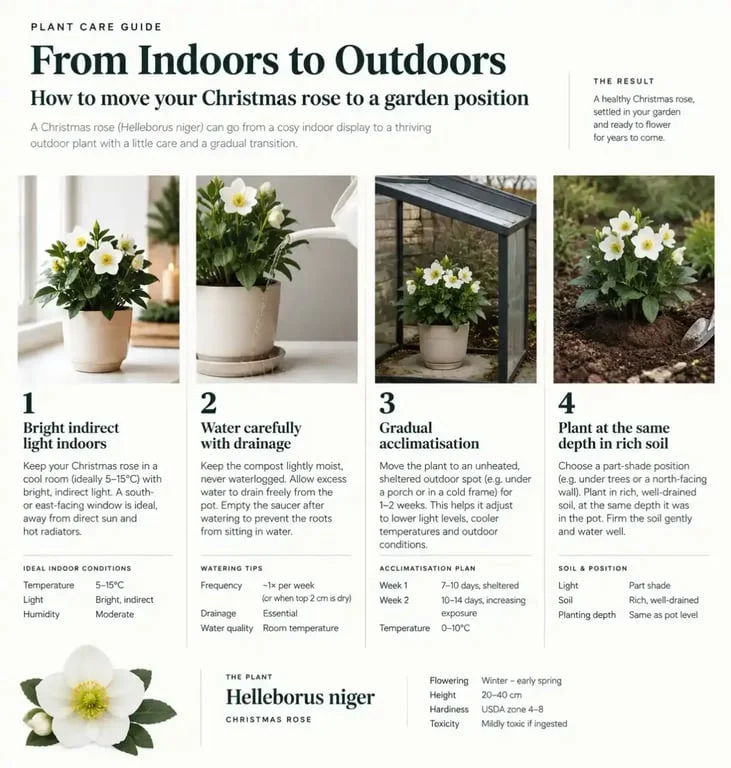
A Christmas rose can serve as a living holiday centerpiece, but it is not a permanent houseplant. Give it bright indirect light or gentle morning sun, and choose a cool position. A temperature around 60–65°F is preferable to a heated room, a spot beside a radiator or a fireplace mantel.
The Christmas Rose, or Helleborus
Water for moist roots, not wet roots
Check the compost regularly and water when the surface begins to feel dry. Water thoroughly, then allow the excess to drain. Never leave the nursery pot sitting in water inside a decorative cachepot. Saturated compost deprives the roots of oxygen and can quickly cause the plant to decline. Remove foil wrapping, or make sure the container has drainage holes.
- Place the plant near a bright window, away from direct afternoon heat.
- Keep it indoors for a few weeks rather than for the whole winter.
- Turn the pot every few days so the growth develops evenly.
- Remove faded flowers when they become untidy.
Warm, dry indoor air can cause the plant to wilt, even when the compost is damp. Check the roots before watering again rather than following a fixed schedule. The aim is lightly moist compost, without standing water or sudden temperature changes.
Move it outdoors after the celebrations
Once the festive display is over, gradually acclimatise the plant to cooler conditions. Place it in a sheltered, unheated area for several days before planting it outside. This step reduces the shock of moving it directly from indoor warmth to frost.
Choose the right garden position
Plant your Christmas rose in part shade, ideally with morning sun and protection from strong afternoon sun. It prefers rich, well-drained soil that stays evenly moist without becoming waterlogged. A position beneath deciduous shrubs or trees often works well: the plant receives more light in winter, then gains shade as leaves appear in spring.
- Water the plant while it is still in its pot.
- Dig a hole slightly wider than the root ball.
- Set the plant at the same depth as it was growing in the pot.
- Firm the soil gently, water it in and add a light mulch around, but not over, the crown.
Flowering may slow after the move because the plant is adjusting to its new conditions. With the right soil and light, it can return with winter flowers for years instead of becoming disposable seasonal décor.
Choose and handle a healthy plant safely
When buying a Christmas rose plant, look for firm foliage, several unopened buds and compost that is damp but not sour-smelling or sodden. A plant with both buds and open flowers usually provides a longer display. Avoid specimens displayed beside strong heat sources in a shop, as warm conditions can shorten the life of the flowers.
Like other hellebores, Christmas roses should be treated as ornamental plants, not edible flowers. Keep them away from children and pets that might chew the leaves or blooms, and wash your hands after handling them. If you prune old foliage or divide an established plant, wear gloves because the sap can irritate sensitive skin.
The plant’s connection with Christmas comes from winter legends in which a flower appears as a sign of hope and renewal. That symbolism matches its practical appeal. While many holiday arrangements fade within days, this cold-tolerant perennial can continue growing outdoors after the celebrations.
{“@type”:”Article”,”@context”:”https://schema.org”,”headline”:”The Christmas Rose Plant Is a Winter-Blooming Hellebore, Not a Rose”,”inLanguage”:”en-US”,”description”:”A Christmas rose plant brings white, pink-flushed or pale green flowers to the darkest part of the year. Despite its name, it is not a rose but a winter-blooming hellebore. You…”}
Observe the plant before changing the routine
Rose and garden advice depends on climate, soil drainage, sunlight, airflow and the age of the plant. Before pruning, feeding or spraying, look at the leaves, stems, buds and surrounding soil. A rose in a windy dry spot needs different care from one growing in humid shade, even when the symptoms look similar at first glance.
Avoid applying several treatments at once. Water correctly, remove damaged growth, improve airflow and identify pests or disease before reaching for a spray. A measured response protects beneficial insects and helps the plant recover without unnecessary stress.
Related guides to continue
To build a stronger understanding of this topic, continue with these related guides from the same site. They cover nearby decisions, maintenance points and practical details that often influence the final result.