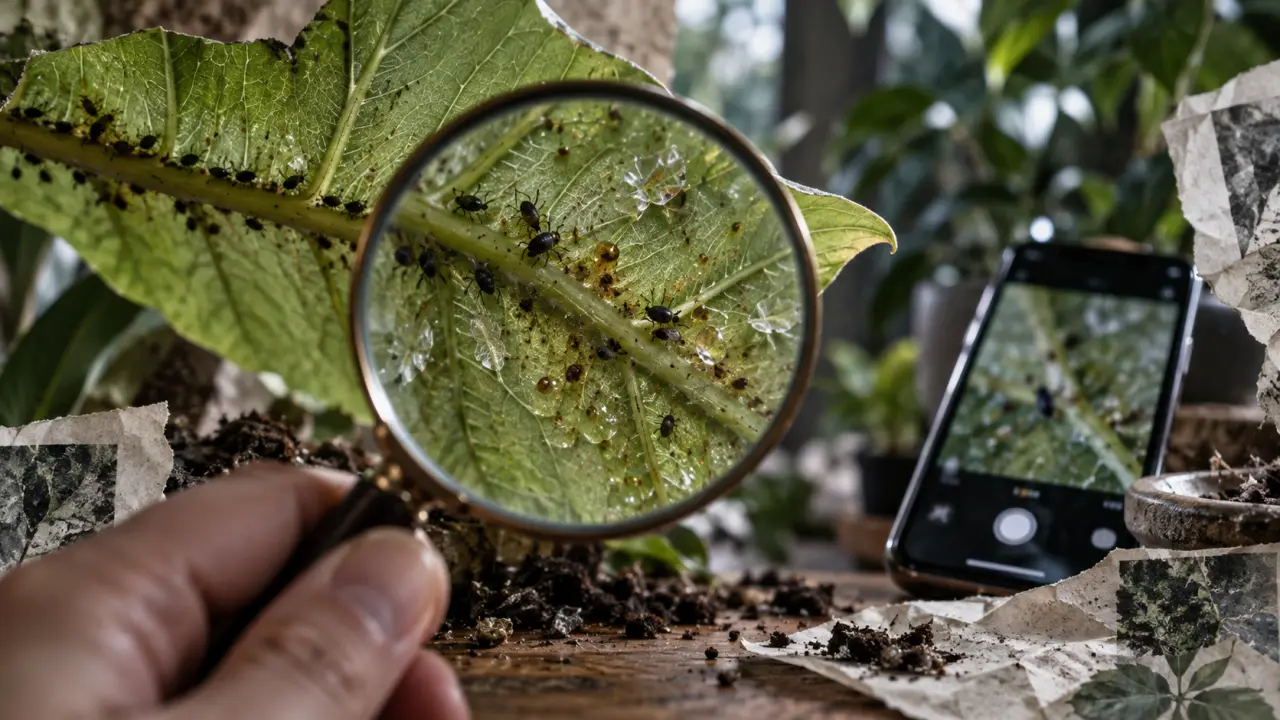
Little black bugs on plants are not always aphids. To identify them, check where they gather, whether they fly or jump, what their bodies look like, and which symptoms they leave behind. This first step matters: a treatment for aphids will not solve fungus gnats breeding in damp potting soil.
Start with location, movement, and leaf damage
Inspect the plant in bright light, including the undersides of leaves, stem joints, new shoots, flower buds, the soil surface, and drainage holes. A hand lens or your phone camera’s close-up mode can reveal useful details. Avoid spraying before you identify the pest. Movement and feeding marks often provide the clearest clues.
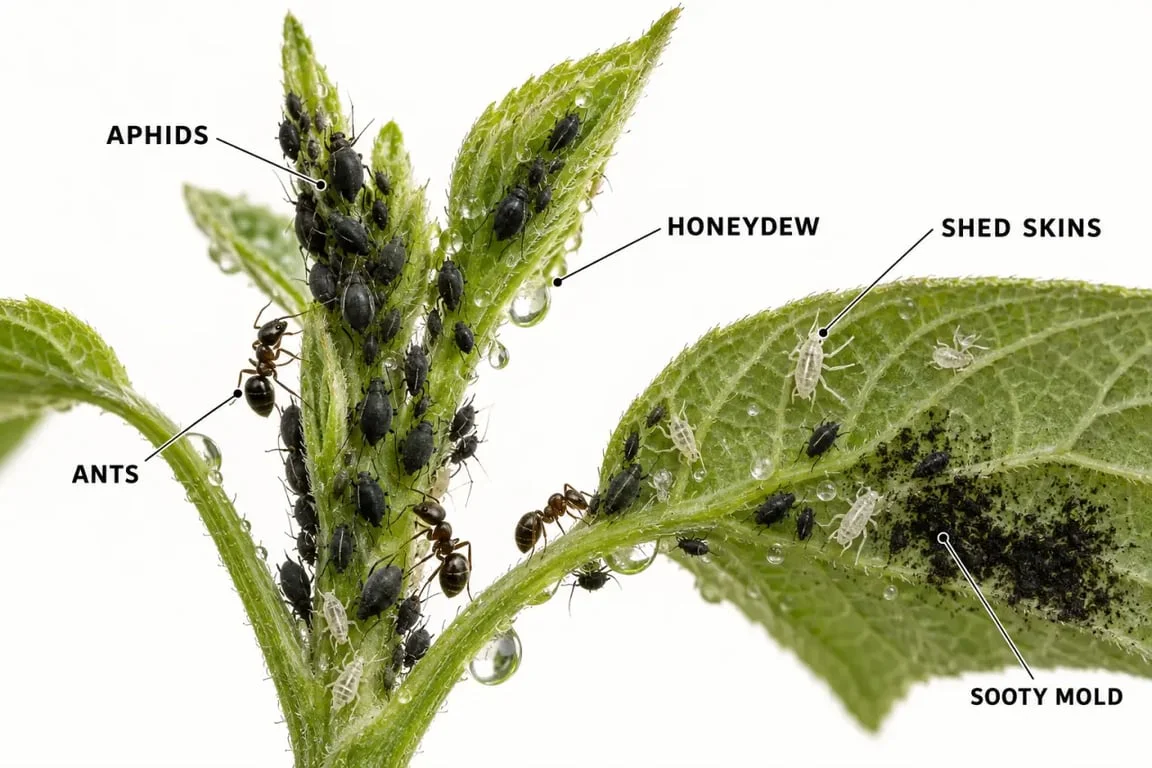
| Pest | Where you find it | Key clue | Typical damage |
|---|---|---|---|
| Black aphids | New growth, stems, leaf undersides | Dense, pear-shaped clusters | Curled leaves and sticky honeydew |
| Fungus gnats | Above moist potting soil | Small adults that fly up when disturbed | Weak growth; larvae may damage roots |
| Thrips | Leaf undersides and flower buds | Very slender, fast-moving bodies | Silvery streaks and distorted growth |
| Flea beetles | Outdoor foliage, especially seedlings | They jump when touched | Small, round “shotgun” holes |
| Springtails | Wet soil and saucers | Tiny insects that spring away | Usually little direct plant damage |
When black aphids are the likely culprit
Black aphids, sometimes called blackfly, are soft-bodied insects that feed on plant sap. They commonly gather around tender shoots because this tissue is easier to pierce and rich in sap. In warm conditions, a colony can grow from a few insects to hundreds in less than a week.
Look for honeydew, ants, and shed skins
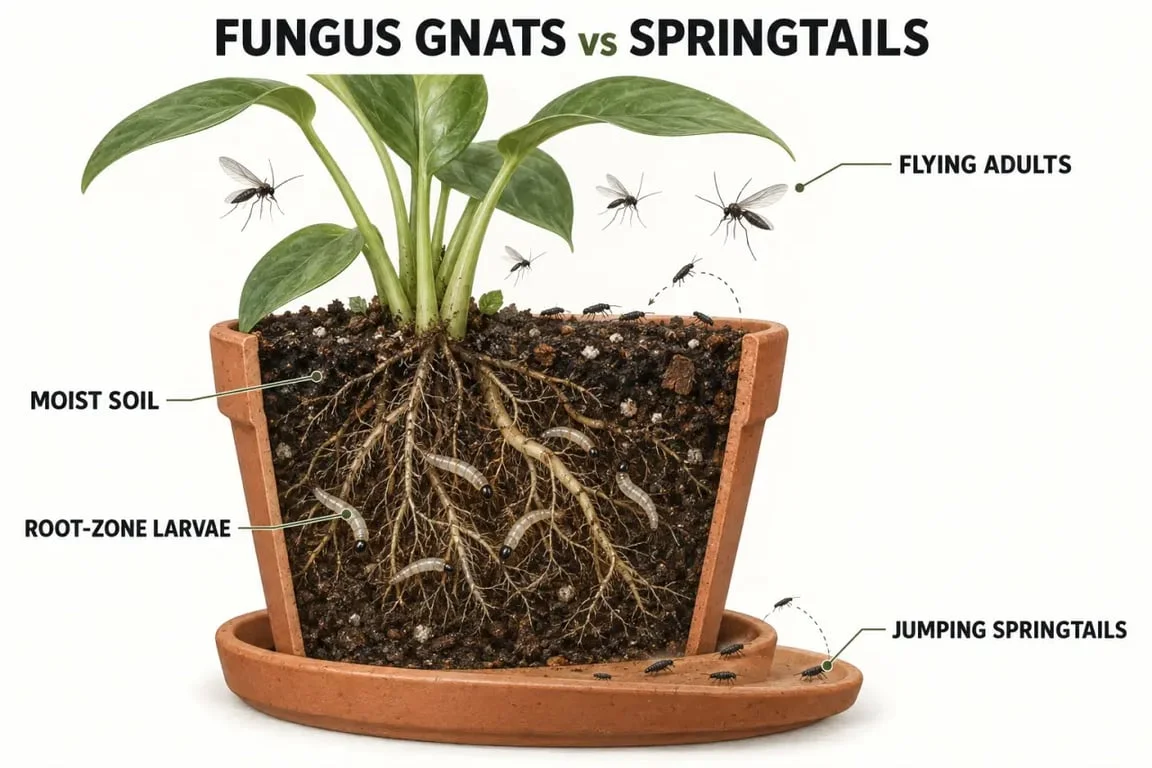
Sticky leaves are a strong sign of aphids. This residue is called honeydew, a sugary waste product that can attract ants. It can also support sooty mold, a dark coating that reduces the light reaching the leaf surface. Pale, papery shed skins may appear among the living insects. These are aphid exuviae, not fungal growth.
Honeydew may begin as a barely visible film. Dust and sooty mold can then collect on it, covering the leaf surface and reducing its ability to capture light efficiently. Wiping the coating away helps you inspect the foliage and spot fresh pest activity.
Know what aphid damage looks like
Early damage includes curled, puckered, yellowing, or misshapen leaves. New stems may look stunted, and flower buds may fail to open normally. Aphids can also transmit plant viruses as they move between plants. Isolate a heavily affected plant promptly, especially in a greenhouse, on a windowsill, or among young vegetable plants.
Separate soil insects from leaf-feeding pests
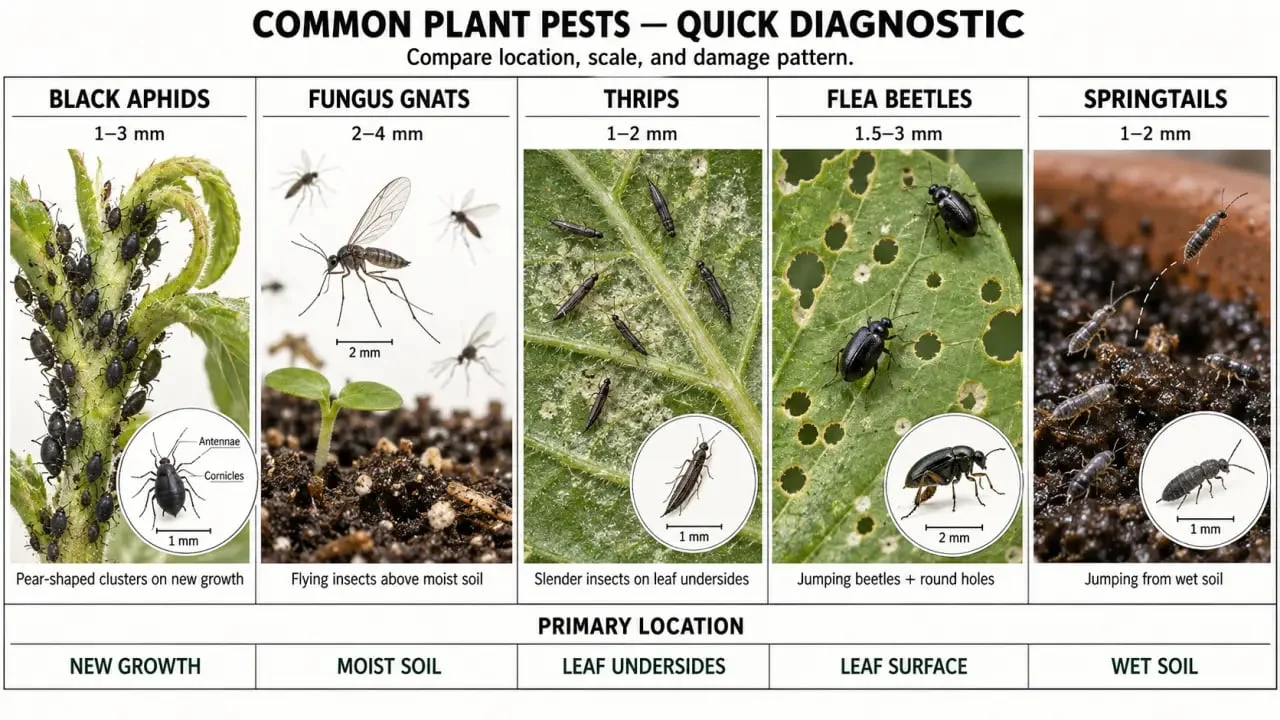
If the insects hover around the pot instead of clustering on the foliage, fungus gnats are more likely. Adult gnats are usually a nuisance, but their larvae live in damp compost and can feed around roots. Seedlings and already stressed houseplants are more vulnerable to this root disturbance.
Fungus gnats thrive in consistently wet compost
When the plant’s care needs allow it, let the top 3 cm, or 1.2 inches, of potting soil dry between waterings. Empty standing water from saucers, check that the pot has drainage holes, and use yellow sticky traps to monitor flying adults. Replacing the soil is not always necessary. Improving watering habits is usually the first useful step.
Springtails also favor moisture and may appear as tiny dark specks on the soil. Their jumping behavior helps distinguish them from fungus gnats. They generally feed on decaying organic matter and are often a sign of overly wet conditions rather than a serious threat to a healthy plant.
Use the least disruptive treatment first
Move an infested houseplant away from other plants before treatment. Outdoors, inspect neighboring plants, but avoid broad spraying when pollinators are active. The right approach depends on the pest, the plant’s sensitivity, the severity of the infestation, and whether you are growing edible crops.
- Rinse aphids off: Use a firm but controlled water spray on leaf undersides and stem tips. Support delicate leaves with one hand.
- Remove visible colonies: Wipe small aphid groups with a damp cloth. You can also gently prune badly infested tips if the plant can tolerate it.
- Use insecticidal soap: The product must contact soft-bodied pests directly. Cover the upper and lower leaf surfaces, then follow the label exactly.
- Consider neem or horticultural oil: These products can help with persistent aphids and some other pests. Test the product on one small area first to check for phytotoxicity, or spray damage.
Household dish soap is not interchangeable with formulated insecticidal soap. Strong detergents can strip the protective surface from leaves and cause burning or spotting. Never spray a heat-stressed plant or apply treatment in direct sun. Avoid treating open flowers while bees and other beneficial insects are feeding.
Apply treatments only when they suit the plant and the crop. Edible plants require particular care, so check the product label before use. Because eggs, larvae, nymphs, and adults may not all be affected at the same time, inspect the plant again after treatment and repeat it only as directed.
Prevent a repeat infestation and know when to escalate
Check new plants before bringing them indoors, then quarantine them for a short observation period. Each week, examine growing tips, leaf undersides, flower buds, and the soil surface. Good airflow, suitable spacing, proper drainage, and plant-specific watering reduce the conditions that favor many pests.
- Encourage lady beetles, lacewings, hoverflies, predatory midges, and parasitoid wasps outdoors by avoiding unnecessary broad-spectrum insecticides.
- Use floating row covers on young outdoor crops if flea beetles are creating holes in the leaves.
- Inspect the plant again after treatment because different life stages may not be affected at the same time.
- Seek professional pest-control or horticultural advice if the plant declines despite treatment, the pests keep returning, or virus-like symptoms spread between plants.
A clear photo can help when identification remains uncertain. This is especially useful for thrips and mites, which are easy to confuse without magnification. Accurate identification prevents repeated treatments that stress the plant while leaving the real cause untouched.
{“@type”:”Article”,”@context”:”https://schema.org”,”headline”:”Little Black Bugs on Plants Are Not Always Aphids: Identify Them by Location and Damage”,”inLanguage”:”en-US”,”description”:”Little black bugs on plants are not always aphids. To identify them, check where they gather, whether they fly or jump, what their bodies look like, and which symptoms they leave…”}
Related guides to continue
To build a stronger understanding of this topic, continue with these related guides from the same site. They cover nearby decisions, maintenance points and practical details that often influence the final result.