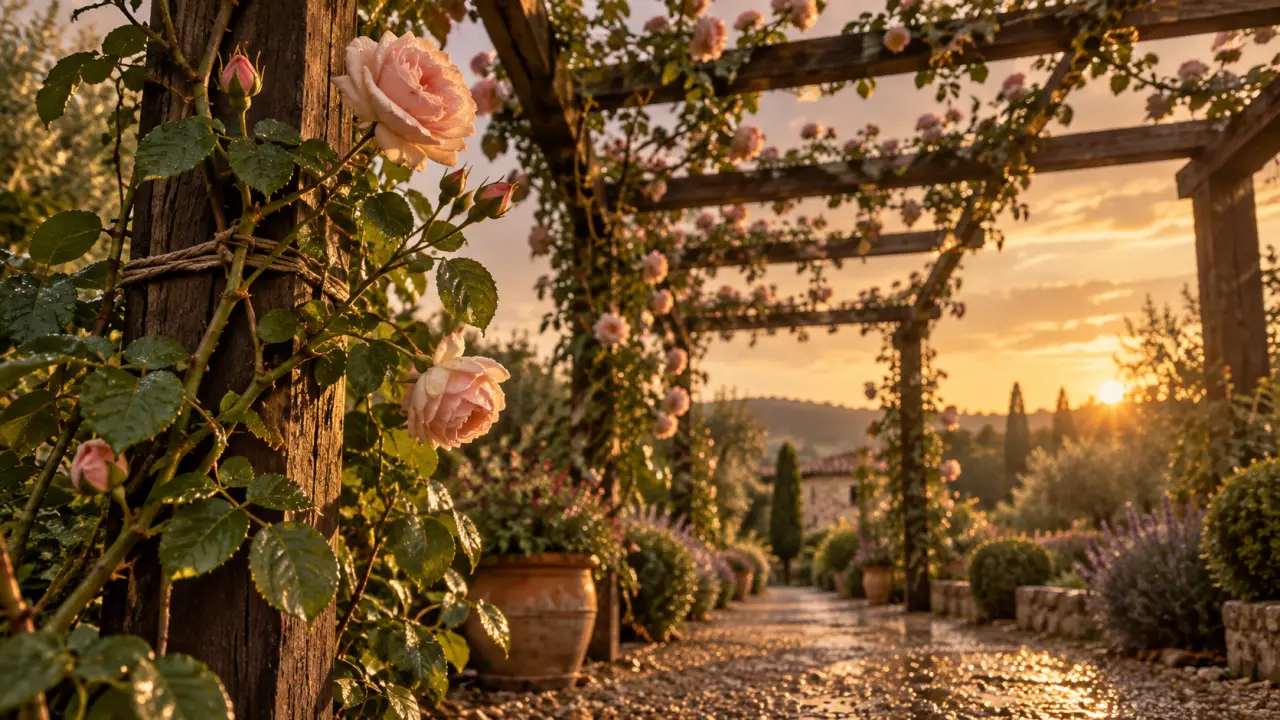
Climbing roses can turn a plain pergola into a fragrant garden room, but a full display depends on more than choosing an attractive variety. The rose must match the structure’s size and strength, have enough space for its roots, and be guided across the roof while its shoots are still flexible.
Choose a rose that matches the pergola
For climbing roses on a pergola, mature height, spread and growth habit matter more than the label alone. A rose that is too small may never cover the roof properly. One that is excessively vigorous can become heavy, tangled and difficult to prune. Check the expected mature dimensions before buying, then choose a plant that can reach the top and extend along the crossbeams without repeated hard cutting.
Climber or rambler?
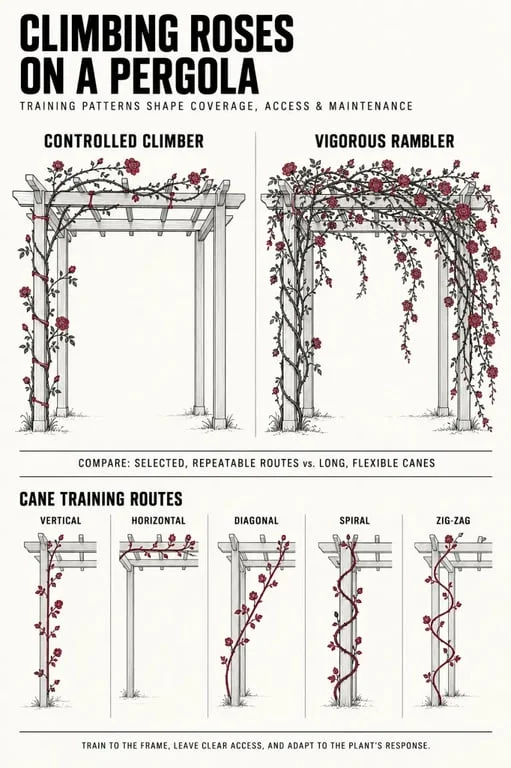
Climbing roses usually have stronger, stiffer canes. They suit a neat pergola where you want manageable growth and, often, repeat flowers through summer. Rambling roses have a looser, more flexible habit. They are easy to weave through a large structure, but they can quickly overwhelm a small pergola.
Choose a rambler for an informal effect on a substantial support. Choose a climber when you want more control and a more defined framework. In either case, look for enough vigor to reach the roof and extend across adjoining sections, without selecting a plant that will outgrow the structure.
| Garden priority | Useful rose profile | Examples from available variety information |
|---|---|---|
| Small or modest pergola | Controlled growth around 8 feet | Lady of Shalott, Arborose Tangerine Skies, or Westerland |
| Medium pergola with repeat display | Climber reaching about 10 to 12 feet | Eden Climber, Don Juan, Cecile Brunner, or Dublin Bay |
| Large, informal structure | Very vigorous, broad rambler | Albertine, up to 15 feet tall and 12 feet wide |
Fragrance deserves priority near a doorway, seating area or path where you will notice it regularly. Disease resistance and fewer thorns also help on a pergola that needs frequent tying and pruning. If you want flowers over a long period, select a repeat-flowering climber rather than assuming every climbing rose will bloom continuously.
Prepare the site and the support before planting
A mature rose-covered pergola carries much more weight than it appears to when newly planted. Inspect the joints, posts and fixings before the rose grows across them. The structure must support woody canes, dense foliage and rain-soaked flowers, while still allowing you to reach the plant for maintenance.
Sunlight, airflow and root space
Most climbing roses perform best in direct sun and well-draining soil. At least 4 hours of direct sunlight per day is a useful minimum, although more sun generally supports stronger flowering. An open position also improves air circulation around the leaves. Avoid locations where trees, shrubs or foundations will compete heavily for water and nutrients.
Do not plant directly against a solid post. Set the rose at least 18 inches, or 45 cm, away from the post or pillar so its roots have usable soil rather than dry, compacted ground. Angle the plant at approximately 45 degrees towards the support, then guide its first shoots gently upward.
If you want balanced coverage, plant two roses on opposite sides of the pergola rather than forcing one plant to travel around every side. This gives each rose a shorter route and makes it easier to distribute the canes across the roof.
Train canes across the roof, not only upwards
The most common mistake with climbing roses on a pergola is allowing every cane to grow vertically. This sends flowers towards the top while leaving the sides and roof framework sparse. Roses do not cling to wood or metal by themselves, so they need regular, loose ties and a planned route across the structure.
Use the flowering loop
Think of each main cane as part of a living framework. Once it reaches a beam, send it sideways, diagonally, in a spiral or through a gentle zigzag before directing the next cane upward. This increases the length of cane exposed to light and creates more points for flowering side shoots.
Instead of a single crowded crown at the roofline, the pergola develops layers of bloom at eye level, overhead and along its outer edges. Horizontal and angled training also helps fill empty sections without forcing the rose into repeated hard pruning.
Tie young stems while they are soft and pliable. Use soft garden ties and leave enough room for the cane to thicken. Tight ties can rub the bark or constrict growth. Fan stems across separate beams rather than bundling them together. Check the ties during the growing season, especially after windy weather, because young canes can snap where they are poorly supported.
- Guide the strongest canes towards empty sections of the pergola.
- Run long canes horizontally or diagonally whenever possible.
- Keep canes spaced so light and air can move through the foliage.
- Replace tight, worn or weather-damaged ties promptly.
Keep pergola roses flowering and manageable
Establishment takes patience. Most roses need around 3 to 5 years to reach their full potential. During this period, focus on building a well-distributed framework rather than demanding immediate coverage. Water at the base, particularly during dry spells, instead of wetting the foliage overhead. This reduces the conditions that can contribute to disease problems.
Feeding, deadheading and pruning
Apply a balanced fertiliser in spring after pruning, following the package directions. Remove spent flowers on repeat-flowering climbers to keep the display tidy and encourage further blooms. During the first 2 years, avoid heavy pruning. Young plants need their main canes to lengthen and establish the framework that will eventually cover the pergola.
Once established, pruning is commonly done in late winter or early spring while the plant is dormant, depending on the variety. Remove dead wood, untangle crossing growth and retain healthy main canes that fill the structure. Side shoots can be shortened to approximately 2 to 3 inches from the main stem.
Prune with the pergola’s final shape in mind. Keep the long main canes that form the roof and shorten only the side growth that has finished flowering or is becoming crowded. This keeps the rose productive without removing the framework that gives the pergola its coverage.
Design a pergola that feels inviting in every season
A rose-covered pergola works best when its planting reflects how you use the garden. Pale flowers can brighten a shaded-looking corner, while deep red or orange varieties create a stronger focal point. A fragrant climber near a bench makes the structure feel more intimate. A broad rambler over a garden route creates a softer, wilder canopy.
For a balanced result, repeat one colour on both sides or combine roses with similar vigor so one does not dominate the other. Consider the mature spread as well as the height, particularly when several plants share the same structure.
Leave enough visible structure beneath the canopy. The timber or metal frame gives the flowers definition, while open spaces make seasonal changes more noticeable. With careful training and regular inspection, the pergola becomes a usable part of the garden, not simply a support hidden beneath an uncontrolled mass of growth.
{“@type”:”Article”,”@context”:”https://schema.org”,”headline”:”Climbing Roses on a Pergola: Why Vertical Training Leaves the Roof Bare”,”inLanguage”:”en-US”,”description”:”Climbing roses can turn a plain pergola into a fragrant garden room, but a full display depends on more than choosing an attractive variety. The rose must match the structure’s…”}
Related guides to continue
To build a stronger understanding of this topic, continue with these related guides from the same site. They cover nearby decisions, maintenance points and practical details that often influence the final result.